Clean Room Manufacturing: What Medical OEMs Should Look for in a Partner
As medical devices become smaller, more complex, and increasingly sophisticated, the manufacturing environments behind them are evolving too.
For medical OEMs, clean room manufacturing is no longer simply about producing components in a controlled space. It is part of a broader manufacturing strategy that must account for contamination control, process consistency, material handling, assembly, quality requirements, traceability, and scalability.
These considerations become even more important as products move from development into commercialization. A process that works during early production must ultimately be capable of delivering the same level of control and consistency as volumes increase.
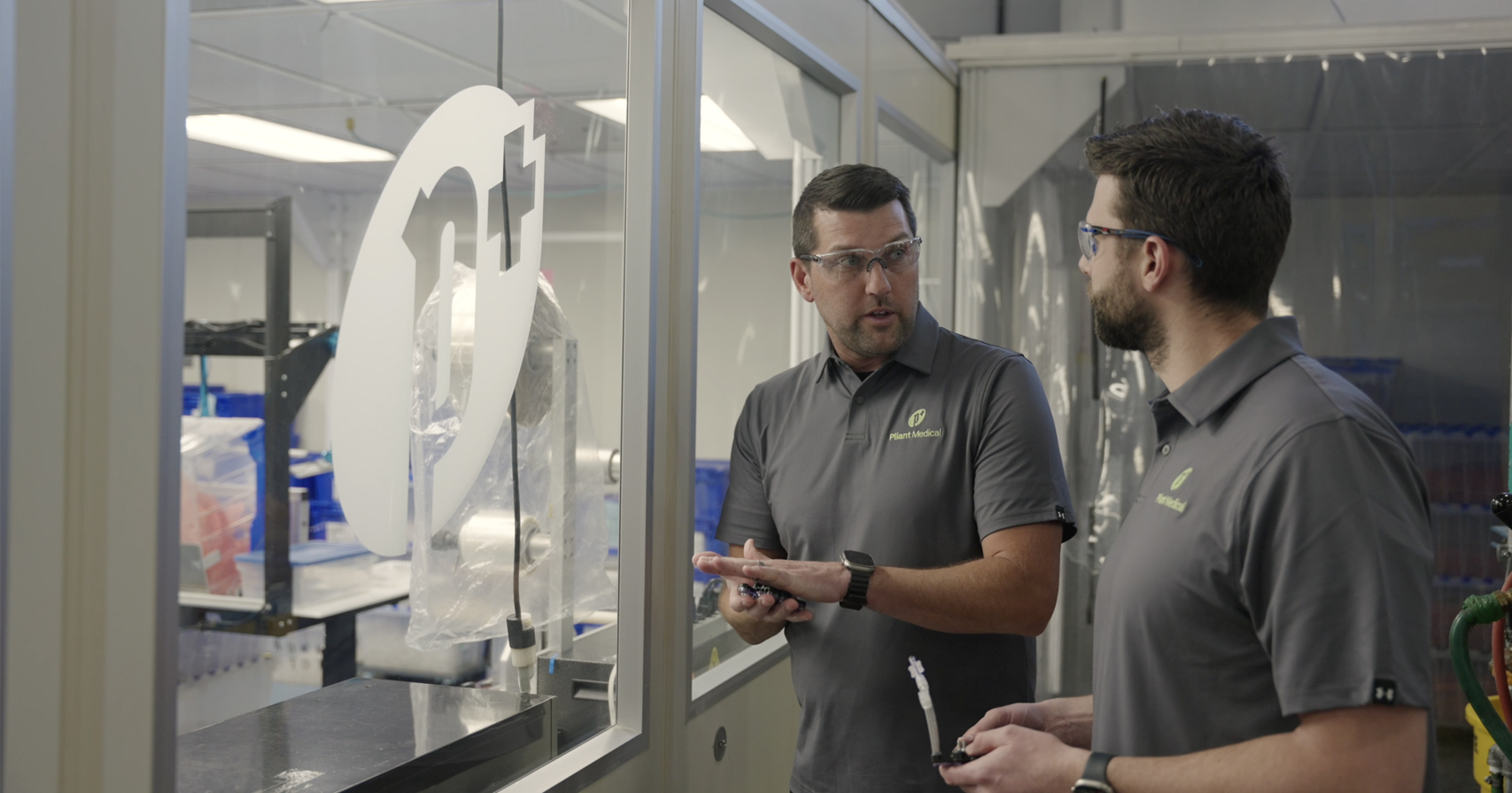
At Pliant Medical, our ISO Class 7 clean room capabilities support injection molding, assembly, joining, testing, packaging, and other manufacturing needs for demanding medical applications. By bringing these capabilities together with engineering expertise and disciplined quality systems, we help customers build manufacturing processes designed for both today's requirements and what comes next.
Why Clean Room Manufacturing Is Becoming More Important
Clean room manufacturing has long played an important role in medical device production, but several industry trends are increasing the need for controlled manufacturing environments.
Increasingly Complex Medical Technologies
Medical technologies continue to become smaller, more integrated, and more technically demanding.
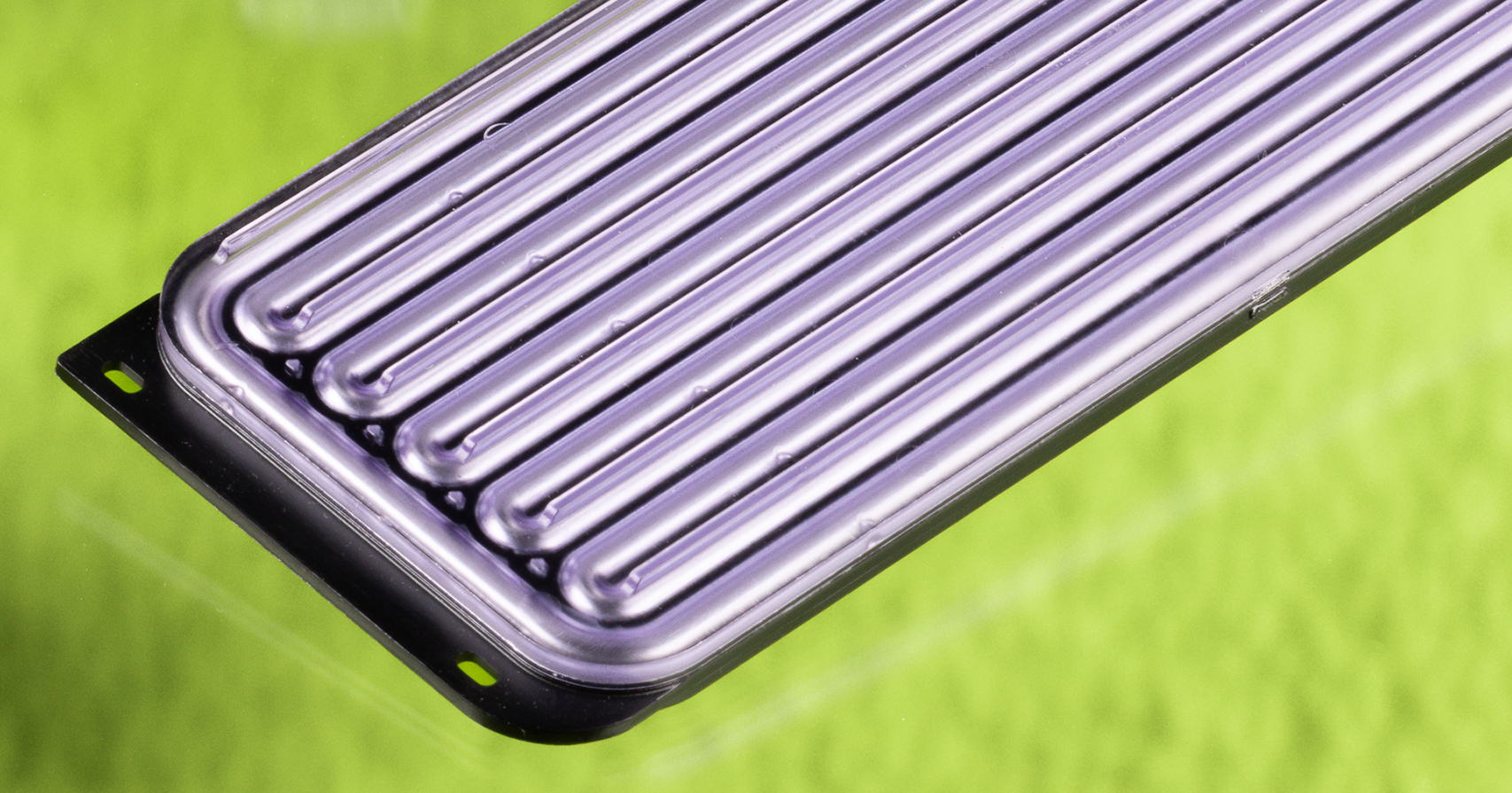
Wearable devices, diagnostic systems, minimally invasive technologies, drug delivery products, electronic medical devices, and other advanced applications can incorporate complex molded geometries, sensitive components, multiple materials, and intricate assemblies.
As complexity increases, so does the importance of controlling the conditions surrounding production.
Particulate contamination, inconsistent handling, or environmental variability can introduce unnecessary risk into a manufacturing process. A controlled environment helps manufacturers establish more consistent conditions across molding, assembly, joining, testing, and packaging operations.
For OEMs, the question is increasingly not just whether a component can be manufactured, but whether it can be manufactured consistently, repeatably, and at the scale the program requires.
Greater Expectations for Process Control and Traceability
Medical manufacturing requires a high level of discipline throughout the production process.
OEMs need confidence that their manufacturing partners can establish repeatable processes, maintain appropriate documentation, control materials and components, and provide traceability throughout production.
A clean room is only one piece of that equation.
The environment must be supported by established procedures, trained employees, appropriate quality controls, and manufacturing processes designed around the specific requirements of the product.
This becomes especially important as a program progresses through validation and into commercial production. Decisions made early in development can have a significant impact on the repeatability, efficiency, and scalability of the manufacturing process later.
Contamination Control Across Multiple Manufacturing Steps
Contamination control does not begin and end with injection molding.
Many medical products move through multiple operations before they are ready for the customer. Depending on the application, that may include molding, assembly, joining, product testing, inspection, packaging, and kitting.
Moving components between uncontrolled and controlled environments can introduce additional handling and complexity. For products with stringent cleanliness requirements, the ability to perform multiple manufacturing operations within a controlled environment can help create a more streamlined production flow.
This is why OEMs should evaluate more than the presence of a clean room when selecting a manufacturing partner. The capabilities available within that environment can be just as important.
Key Considerations for Medical OEMs
Not every clean room manufacturing program has the same requirements. The right approach depends on the product, materials, component design, regulatory considerations, production volume, and downstream operations.
When evaluating a potential manufacturing partner, OEMs should consider several factors.
Clean Room Molding Capabilities
For injection molded medical components, the molding process itself is a critical starting point.
Manufacturers should be able to demonstrate control over the variables that influence component quality and repeatability, including material handling, tooling, molding parameters, equipment, and the surrounding production environment.
At Pliant Medical, our ISO Class 7 clean room includes injection molding across a range of press sizes, allowing molding to take place within the controlled environment rather than requiring components to be transferred into the clean room after production.
Value-Added Operations
For many programs, molding is only one step in the manufacturing process.
A partner with complementary capabilities can support a more integrated manufacturing strategy. Depending on the product, this may include assembly, plastic joining, laser welding, ultrasonic welding, electronic testing, packaging, and kitting.
Bringing multiple operations together can reduce the number of handoffs between suppliers and give OEMs a more cohesive path from molded component to finished assembly.
Quality Systems and Validation Support
Equipment and facilities matter, but they need to be supported by disciplined quality systems.
OEMs should consider how a manufacturer approaches inspection, process documentation, traceability, validation, risk management, and continuous improvement.
Pliant Medical's clean room operations are supported by established quality systems, including ISO 9001:2015 and ISO 14001:2015 certifications and MedAccred Plastics accreditation. Pliant Medical is also advancing toward ISO 13485:2016 certification, expected by the end of 2026.
Engineering Support Before Production
Some of the most important clean room manufacturing decisions happen before a tool ever reaches the press.
Early collaboration between an OEM and its manufacturing partner creates an opportunity to evaluate part geometry, material selection, tooling strategy, assembly requirements, and manufacturing processes before those decisions become more difficult or expensive to change.
Design for manufacturability can help identify potential challenges early and establish a production strategy that considers not only whether the product can be made, but how it can be made reliably and at scale.
For complex medical programs, this early engineering engagement can help create a smoother transition from development and validation to commercialization.
Early planning also helps OEMs account for future capacity, tooling, inspection, assembly, automation, and packaging needs, creating a manufacturing strategy designed to scale as the program moves toward commercialization.
Clean Room Manufacturing at Pliant Medical
Pliant Medical provides clean room manufacturing as part of a broader end-to-end approach to medical contract manufacturing.
Our dedicated medical facility includes an ISO Class 7 clean room with flexible injection molding capabilities to accommodate a variety of component and production requirements, supported by additional services that allow us to help customers throughout the manufacturing journey.
Our capabilities include:
- ISO Class 7 clean room injection molding and assembly
- Injection molding across a range of press sizes
- Insert molding, overmolding, two-shot molding capabilities, and micro molding capabilities
- Laser welding
- Product testing
- Packaging and kitting
- Design for manufacturability and engineering support
- Prototyping and tooling support
- Tool transfer
- Contract manufacturing from individual components through more complete assemblies
By combining engineering, molding, value-added operations, and quality under one manufacturing partnership, Pliant Medical can engage early in development and continue supporting programs as they move toward commercialization and scale.
Choosing the Right Clean Room Manufacturing Partner
As medical technologies continue to advance, OEMs need more from a clean room manufacturing partner than a controlled environment.
They need a partner capable of understanding the product, identifying manufacturing challenges early, establishing repeatable processes, supporting quality requirements, and adapting as the program evolves.
The right manufacturing strategy connects all of these pieces.
At Pliant Medical, we work alongside customers throughout the journey, bringing together engineering expertise, ISO Class 7 clean room manufacturing, advanced molding capabilities, value-added operations, and disciplined quality systems to support demanding medical applications.
Whether you're developing a new medical product, transferring an existing program, or preparing to scale production, connect with Pliant Medical to start the conversation.
Does Pliant Medical Sound Like a Good Fit?
We’d love to review your project requirements and talk in greater detail.